
Tyche the goddess of fortune and prosperity

Why Tyche?
“Tyche” was an extreme popular goddess in ancient times, the Greek goddess of chance, fate, and fortune and the Roman’s knew her as “Fortuna”. She ruled and navigated the “wheel of fortune” or “rudder” to guide the affairs of the world. For prayers, she poured gold coins from her cornucopia as a symbol of the giver of abundance.
She represented not only these positive aspects but also the negative ones. The ancient Greeks thought she was the reason for unexpected events in their lives; good and evil. One of her symbols is “The two rudders” that symbolize the ability of Tyche to steer or guide lives in two directions creating the fortunate and the unfortunate among mortals.
I named my therapy practice after “Tyche” as I believe, we can create our own destiny if we just become aware of how things work in our psyche. What we know as “I” is usually 90% our unconscious mind or our Psyche and 10% our conscious mind. This reveals why we are all not as happy, rich, successful, or fulfilled as we deserve; because 90% of our choices, reactions and decisions are made by our unconscious mind even before we recognize it. Therapy helps to shed a light in your unconscious mind (psyche), to see which habit, emotion or wound took over the rudder of your life. Therapy helps you become aware of all these, how they act in your psyche, and enables you to get back control of the rudder to guide yourself to the shores of prosperity and fortune.
Why is she blindfolded?
She wears a blindfold to make sure she is completely neutral when she bestows luck and fortune to her worshipers. It symbolizes that regardless of our appearance, success, and fame, we all deserve happiness and fortune.
More about Tyche if you like the old myth
Tyche (/ˈtaɪki/; Roman equivalent: Fortuna )
Tykhe, also known as Tyche, was the Greek goddess of chance, fate, and fortune. She represented not only the positive aspects of these characteristics but also the negative ones. The ancient Greeks thought she was the reason for unexpected events in their lives; good and evil. For example, if someone had much success in life without having to try hard, people said that Tyche blessed them at birth. When someone worked hard but still had bad luck, they thought this goddess was responsible. When the ancient Greeks honored her beneficial traits, they usually referred to her as Eutychia or Eutiykhia, goddess of prosperity, success, and good fortune.
If she had a horn of plenty, she was a giver of abundant prosperity and wealth. When Tyche was balancing on a ball, it symbolized unstable fortune that could come and go, just like a ball might roll in any direction. In Rome, this goddess was known as Fortuna. She was known for love and fertility, and women worshiped her to seek the ideal mate and healthy pregnancies.
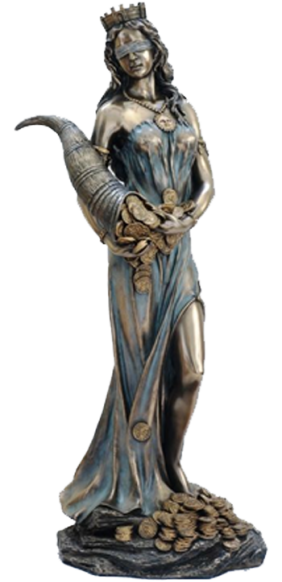
The Symbols of Tyche
Each ancient Greek god and goddess was associated with special symbols. Here is her symbols and their meanings:
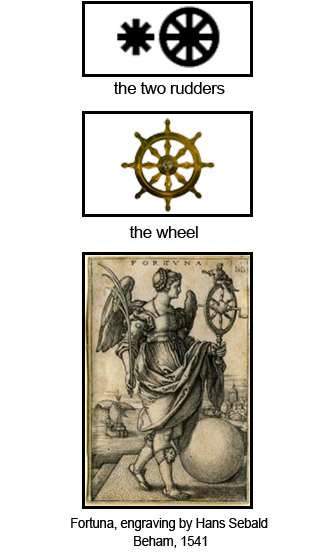
The two rudders
These symbolize the ability of Tyche to steer or guide lives in two directions creating the fortunate and the unfortunate among mortals
The wheel
The wheel symbolized the wheel of fortune
Cornucopia (horn of plenty)
The symbol of prosperity and riches
The scepter
The symbol of authority
Wings
Her wings symbolized her as gifted with magic and the power of flight
The ball
Juggling with a ball epitomizes the uncertainty of chance: sometimes up, sometimes down
Useful links:
The wheel
The wheel symbolized the wheel of fortune

Cornucopia (horn of plenty)
The symbol of prosperity and riches
The scepter
The symbol of authority
Wings
Her wings symbolized her as gifted with magic and the power of flight
The ball
Juggling with a ball epitomizes the uncertainty of chance: sometimes up, sometimes down